EN 71, REACH & EUDR: EU Kids Apparel Compliance (2026)
How EU importers of kids apparel from Türkiye meet REACH, EN 71-3:2019+A2:2024, GPSR Responsible Person, EUDR scope and EN 14682 cords — 2026 buyer guide.
Six overlapping EU regulations now govern every children's apparel shipment crossing the European border, and the compliance calendar has never been tighter. The General Product Safety Regulation (GPSR) has applied since 13 December 2024, the amended chemical standard EN 71-3:2019+A2:2024 was published on 4 December 2024, and the EU Deforestation Regulation (EUDR) lands on 30 December 2026 for large operators. Penalties for serious non-compliance reach 4% of annual EU turnover under GPSR Article 44, and the REACH SVHC Candidate List has expanded to 253 entries as of February 2026 ([ECHA](https://echa.europa.eu/candidate-list-table), 2026). For buyers sourcing kids apparel from Türkiye, the 6-rule stack is manageable, but only if it's mapped before the first PO.
By the Zeynep Textiles QA & Compliance team · Updated 2026-04-24
Key Takeaways
REACH Annex XVII Entry 72 restricts 33 CMR substances in textiles, clothing and footwear since 1 November 2020 ([EU Commission](https://single-market-economy.ec.europa.eu/sectors/chemicals/reach/restrictions_en), 2020).
EN 71-3:2019+A2:2024, published 4 December 2024, covers migration of 19 elements across 3 material categories ([SGS](https://www.sgs.com/en/news/2024/12/safeguards-18124-cen-issues-en-71-3-2019-a2-2024-migration-of-certain-elements), 2024).
GPSR (Regulation 2023/988) has applied since 13 December 2024, making a named EU Responsible Person mandatory for every product ([EUR-Lex](https://eur-lex.europa.eu/eli/reg/2023/988/oj), 2023).
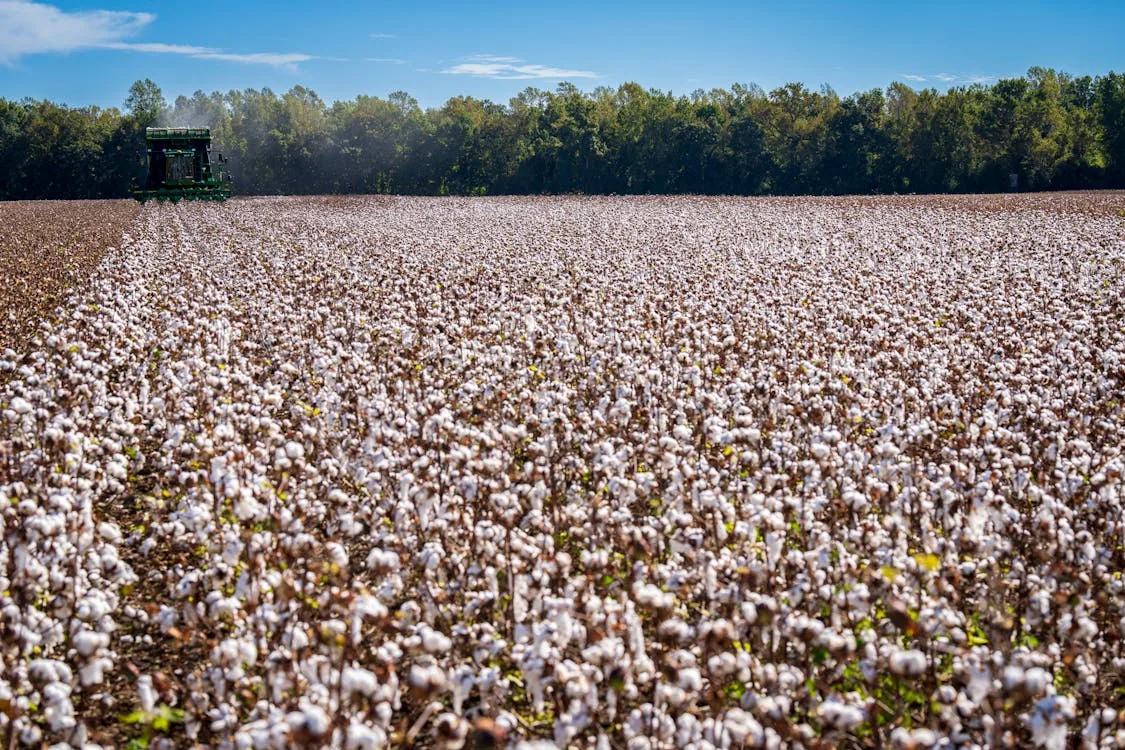
EUDR applies from 30 December 2026 (large operators) and 30 June 2027 (SMEs); cotton is not in scope, but cattle leather and wood are ([EU Commission](https://trade.ec.europa.eu/access-to-markets/en/news/delay-until-december-2026-and-other-developments-implementation-eudr-regulation), 2025).
Türkiye supplies roughly 17% of EU textile imports and is the 3rd-largest EU clothing supplier ([CBI](https://www.cbi.eu/market-information/apparel/what-demand), 2025).
Which EU Regulations Apply to Kids Apparel in 2026?
Six rule-sets stack on top of every kids apparel SKU entering the EU: REACH chemical restrictions, EN 71-3 migration limits when garment parts qualify as toys, GPSR horizontal product-safety duties, EUDR deforestation due diligence for leather and wood parts, the EU textile labelling regulation, and the sector-specific mechanical standards EN 14682 and CEN/TS 17394. GPSR has applied since 13 December 2024 and is already enforced at customs ([EUR-Lex](https://eur-lex.europa.eu/eli/reg/2023/988/oj), 2023).
The rules don't replace each other. They layer. A cotton t-shirt with a plush applique and a leather-look trim triggers REACH (dye residues), EN 71-3 (the plush applique if it reads as a toy), GPSR (the whole product), and EUDR if the trim contains real cattle leather. Miss one rule, and the shipment may clear customs but get recalled later through the Safety Gate rapid-alert system.
Rule
What It Regulates
Buyer Responsibility
REACH Annex XVII + SVHC
Chemical restrictions and communication above 0.1% w/w
Test reports; SVHC declaration within 45 days on request
EN 71-3:2019+A2:2024
Migration of 19 elements from toy-like garment parts
Third-party lab report per batch
GPSR (Reg 2023/988)
General safety, traceability, EU Responsible Person, recall duty
Name a Responsible Person; publish contact on packaging
EUDR (Reg 2023/1115)
Deforestation-free due diligence for listed commodities
Geolocation data and Due Diligence Statement if leather/wood present
Textile Labelling (Reg 1007/2011)
Fibre composition declaration
Correct composition label in the language of the market
EN 14682 / CEN/TS 17394
Cords, drawstrings, snap fasteners
Mechanical test reports at size-set stage
Citation capsule. Six EU regulations now stack on kids apparel: REACH Annex XVII, EN 71-3:2019+A2:2024, GPSR (applied 13 Dec 2024), EUDR (applying 30 Dec 2026), Regulation 1007/2011 on textile names, and EN 14682 / CEN/TS 17394 mechanical safety. Non-compliance can cost up to 4% of annual EU turnover under GPSR Article 44 ([EUR-Lex](https://eur-lex.europa.eu/eli/reg/2023/988/oj), 2023).
What Does REACH Demand from Apparel Importers?
REACH imposes two parallel duties. First, Annex XVII Entry 72 has restricted 33 CMR substances in textiles, clothing and footwear at specified concentration thresholds since 1 November 2020 under Regulation (EU) 2018/1513 ([EU Commission](https://single-market-economy.ec.europa.eu/sectors/chemicals/reach/restrictions_en), 2020). Second, the SVHC Candidate List reached 253 entries in February 2026, most recently after ECHA added five substances on 21 January 2025 ([ECHA](https://echa.europa.eu/-/echa-adds-five-hazardous-chemicals-to-the-candidate-list-and-updates-one-entry), 2025).
Most importers treat REACH as a single SVHC disclosure exercise. That's a mistake. Entry 72 is a hard restriction: if a regulated CMR substance, say certain formaldehyde levels or benzidine-releasing azo dyes, exceeds the Annex XVII threshold, the garment cannot be placed on the EU market, full stop. SVHC, in contrast, is a communication duty above 0.1% w/w per article. They look similar on paper but carry very different legal consequences, and Entry 72 is where most Asian dye-house failures hide.
Practical documentation for buyers: a recent REACH test report covering Entry 72 CMR substances plus the current SVHC list, ideally renewed every 12 months or whenever fabric or dye-house changes. Test panels should cover each colourway, since some SVHC-flagged pigments are colour-specific.
How Often Should REACH Reports Be Renewed?
Twelve months is the working norm for most EU buyers and retailers. Reports older than 12 months are often refused by major retail compliance teams during supplier onboarding. When the SVHC list updates (typically in January and June), a re-screen against new entries is prudent. For deep-dive methodology, see our internal library on OEKO-TEX, GRS and Sedex for children's clothing.
EN 71-3 Migration Limits: When Toys and Garments Overlap
EN 71-3:2019+A2:2024, published on 4 December 2024, sets migration limits for 19 elements from toy materials across three categories: dry or brittle materials (Category I), liquid or sticky materials (Category II) and scraped-off materials (Category III) ([SGS](https://www.sgs.com/en/news/2024/12/safeguards-18124-cen-issues-en-71-3-2019-a2-2024-migration-of-certain-elements), 2024). The amendment tightens the test logic for small-accessible-parts and brings EN 71-3 into line with ISO 8124-3 revisions.
Kids apparel is outside toy scope by default. The exception matters. When a garment carries toy-like features, a sewn-on plush animal, a pacifier clip, a stuffed hood applique, an embroidered rattle patch, the toy standard attaches to that component. Lab reports should then cover the specific material group of the component, not just the base fabric.
Element
Category III limit (mg/kg scraped-off)
Lead (Pb)
23.0
Cadmium (Cd)
17.0
Mercury (Hg)
94.0
Arsenic (As)
47.0
Chromium VI
0.053
Barium (Ba)
18,750
Organic tin
12.0
Citation capsule. EN 71-3:2019+A2:2024, published 4 December 2024, regulates migration of 19 elements across three material categories. Category III scraped-off limits include lead at 23.0 mg/kg, cadmium at 17.0 mg/kg and chromium VI at 0.053 mg/kg. The amendment applies to toy-like garment components such as plush appliques or pacifier clips ([SGS](https://www.sgs.com/en/news/2024/12/safeguards-18124-cen-issues-en-71-3-2019-a2-2024-migration-of-certain-elements), 2024).
GPSR: The New EU Responsible Person Rule You Cannot Skip
The General Product Safety Regulation (Regulation (EU) 2023/988) has applied since 13 December 2024 and replaces the old GPSD ([EUR-Lex](https://eur-lex.europa.eu/eli/reg/2023/988/oj), 2023). Under Article 16, no product may be placed on the EU market unless there is an economic operator established in the EU responsible for regulatory tasks. A Turkish manufacturer selling direct to EU consumers cannot satisfy this alone. The importer, an EU-established distributor or a contracted fulfilment service must act as the EU Responsible Person.
The Responsible Person's name and postal address, or email, must appear on the product, its packaging, parcel or an accompanying document. For e-commerce listings, the same details must be visible pre-purchase. Platforms like Amazon, Zalando and Allegro already block listings that lack the Art. 16 details.
GPSR also expands recall and Safety Gate reporting. Under Article 20, a serious incident must be reported via the new Safety Business Gateway within 2 working days. Penalties under national implementations can reach 4% of annual EU turnover for severe breaches.
Who Can Be the EU Responsible Person?
Four options in practice: the EU-based importer, an EU-established distributor, a fulfilment service provider with an EU warehouse, or a contracted authorised representative. Turkish manufacturers with a sister company or EU subsidiary often nominate the subsidiary. Independent brands selling DTC into the EU increasingly use third-party Responsible Person services priced at EUR 30-90 per SKU per year.
EUDR: What Cotton Importers Actually Need to Know (Hint: Less Than You Think)
The EU Deforestation Regulation (Regulation (EU) 2023/1115) applies from 30 December 2026 for large operators and 30 June 2027 for micro and small enterprises ([EU Commission](https://trade.ec.europa.eu/access-to-markets/en/news/delay-until-december-2026-and-other-developments-implementation-eudr-regulation), 2025). EUDR covers seven commodities and their derived products: cattle, cocoa, coffee, oil palm, rubber, soya and wood. Cotton is not in scope. Neither is viscose, polyester, linen or wool.
For kids apparel, the practical trigger list is short but important: real cattle leather patches, leather-lined shoes or slippers sold with a garment set, wooden buttons, wooden toggles, rubber rain-boot trims and natural rubber soles. Where any of these components appear, the importer must file a Due Diligence Statement (DDS) in the EU TRACES system with geolocation coordinates of the production plot, proof of legal harvest and proof of deforestation-free status after 31 December 2020.
Most all-textile kids apparel ranges fall outside EUDR entirely. Buyers building winter collections with leather trims or wood-button cardigans should treat EUDR as a sourcing question at the component-supplier level, not a fabric question. The mistake to avoid: assuming EUDR paperwork is needed for every cotton order. It isn't.
What If Just One SKU in the PO Has Leather?
That single SKU needs a DDS. The rest of the PO doesn't. EUDR applies per commodity, per product. Internal PLM systems should flag leather, wood, rubber and cattle-derived components as EUDR-relevant so due diligence is requested only where needed.
Mechanical Safety: EN 14682 Cords and EN 17394 Snap Fasteners
Two EU mechanical-safety standards sit specifically on children's garments. EN 14682:2014 regulates cords and drawstrings. CEN/TS 17394-1:2021 specifies that snap-fastener attachments on infant clothing sized for children up to 36 months (up to 98 cm body height) must withstand a pull force of at least 70 N ([Intertek](https://www.intertek.com/products-retail/insight-bulletins/2021/eu-uk-security-of-attachments-for-childrens-clothing-safety-published/), 2021). These aren't harmonised under GPSR, but retailers treat them as market-entry minimums.
Age band
Cord / drawstring rule
Location restriction
0-7 years
No functional cords in hood or neck area
No drawstrings at all in head/neck zone
0-7 years
Free ends at waist ≤ 20 cm
Waist and bottom hem
0-7 years
Short-sleeve free ends ≤ 7.5 cm
Sleeves
7-14 years
Short-sleeve free ends ≤ 14 cm
Sleeves
All ages
Hood loop (toggle) ≤ 150 mm
Hood
EN 14682 is the most-flagged standard in EU Safety Gate recalls for kids clothing. Design teams should check pattern blocks against the measurement rules before the size-set stage, not at shipment, since reworking drawstrings on a 10,000-piece run is slow and expensive.
How Turkish Manufacturers Prove Compliance
Turkish factories supplying EU retailers typically assemble a document stack that covers all six regulations in one folder per PO. The core is an EU Declaration of Conformity (GPSR Art. 9), supported by third-party test reports from accredited labs, an OEKO-TEX Standard 100 certificate, and a EN 14682 size-set inspection record. OEKO-TEX Standard 100 overlaps roughly 80% of REACH Annex XVII + Entry 72 substances, so a valid OEKO-TEX certificate shortens, but doesn't replace, the REACH evidence chain.
Our QA team's observation from the last 24 months of EU production: first-time sample audits on EN 14682 fail about 18-22% of the time, almost always on hood-loop length or short-sleeve free-end length. REACH Entry 72 failures are rarer, around 3-5% of runs, and cluster on specific reactive dyes used for dark blacks and reds. Once the factory and dye-house combination is locked, repeat failures drop sharply. The bottleneck is the first collection, not the tenth.
Document stack for a typical PO: (1) REACH test report covering Entry 72 and latest SVHC list, (2) OEKO-TEX Standard 100 certificate, appendix 6 product class I for baby items, (3) EN 71-3 migration report if toy-like trims present, (4) EN 14682 and EN 17394 mechanical reports, (5) GPSR Declaration of Conformity with Responsible Person named, (6) EUDR DDS if leather or wood components present. Major Turkish labs handling this include SGS Türkiye, Bureau Veritas, Intertek and TÜV.
Two regulations already in force (GPSR, EN 71-3 amendment); EUDR's large-operator cliff lands 30 December 2026.
2026 Buyer Action Plan
Five steps, tied to the 2026-2027 regulatory calendar, convert the 6-rule stack into a working PO workflow:
Before first PO. Request REACH Entry 72 and SVHC report, OEKO-TEX certificate, EN 14682 size-set record. Confirm factory accreditation with SGS, BV, Intertek or TÜV in Türkiye.
Name your EU Responsible Person. GPSR Art. 16 has applied since 13 December 2024. Printed packaging without Responsible Person details is already non-compliant.
Screen components for EUDR. Before 30 December 2026 (large) / 30 June 2027 (SME), flag any leather, wood or natural rubber trim. Collect geolocation data now, not at the deadline.
Schedule annual REACH re-screens. Align to SVHC update cycles (January and June). Re-screen per colourway when dye-house changes.
Monitor Safety Gate. Subscribe to the weekly EU Safety Gate notifications so you spot category-wide risks, typically drawstring or small-part failures, before your own shipment is recalled ([EU Commission](https://ec.europa.eu/safety-gate-alerts/screen/webReport), 2025).
Frequently Asked Questions
Does REACH apply to clothes with no chemical finish?
Yes. REACH Annex XVII Entry 72 restricts 33 CMR substances in all textiles, clothing and footwear placed on the EU market since 1 November 2020, regardless of finishing claims ([EU Commission](https://single-market-economy.ec.europa.eu/sectors/chemicals/reach/restrictions_en), 2020). Dye residues, cotton-growing chemistries and accessory metals can all trigger it. "Untreated" is a marketing term, not a REACH exemption.
When does my kids apparel count as a "toy" under EN 71?
When a garment carries features designed for play, think sewn-on plush animals, pacifier clips, rattle patches or stuffed hood appliques, the component is assessed under EN 71. EN 71-3:2019+A2:2024 applies migration limits for 19 elements across 3 categories to that component ([SGS](https://www.sgs.com/en/news/2024/12/safeguards-18124-cen-issues-en-71-3-2019-a2-2024-migration-of-certain-elements), 2024). Decorative-only prints typically don't trigger EN 71.
Is cotton covered by EUDR?
No. The EU Deforestation Regulation covers cattle, cocoa, coffee, oil palm, rubber, soya and wood, plus derived products ([EU Commission](https://trade.ec.europa.eu/access-to-markets/en/news/delay-until-december-2026-and-other-developments-implementation-eudr-regulation), 2025). Cotton, linen, viscose, polyester and wool are out of scope. EUDR only triggers for kids apparel when real leather, wood, or natural rubber components are present.
Can my Turkish factory be the EU Responsible Person?
No. GPSR Article 16 requires the Responsible Person to be established in the EU ([EUR-Lex](https://eur-lex.europa.eu/eli/reg/2023/988/oj), 2023). A Turkish manufacturer can nominate an EU subsidiary, an importer, an EU-based distributor, or a fulfilment service. Third-party authorised representatives typically cost EUR 30-90 per SKU per year.
What happens if my SVHC testing is older than 12 months?
Testing older than 12 months doesn't automatically breach REACH, but major EU retailers treat 12 months as the shelf life for onboarding evidence. The SVHC list itself has grown to 253 entries as of February 2026 ([ECHA](https://echa.europa.eu/candidate-list-table), 2026); older reports may not cover recent additions such as n-Hexane or BPAF.
Why Türkiye Simplifies EU Compliance
Turkish mills and garment factories have run parallel to EU standards for three decades under the Customs Union. Most accredited labs are present in İstanbul, Bursa and İzmir, weekly road freight to EU hubs shortens re-testing cycles from weeks to days, and major factories already carry OEKO-TEX Standard 100 and GOTS as a baseline. The 6-rule stack is manageable when the supplier is already inside the EU regulatory perimeter.
This website uses cookies to improve your experience. By continuing to use our site, you accept the use of cookies as described in our
Privacy Policy
.